Judith Engel
Bringing Biodata Communities Together: Two Conferences Connect Developers and Researchers
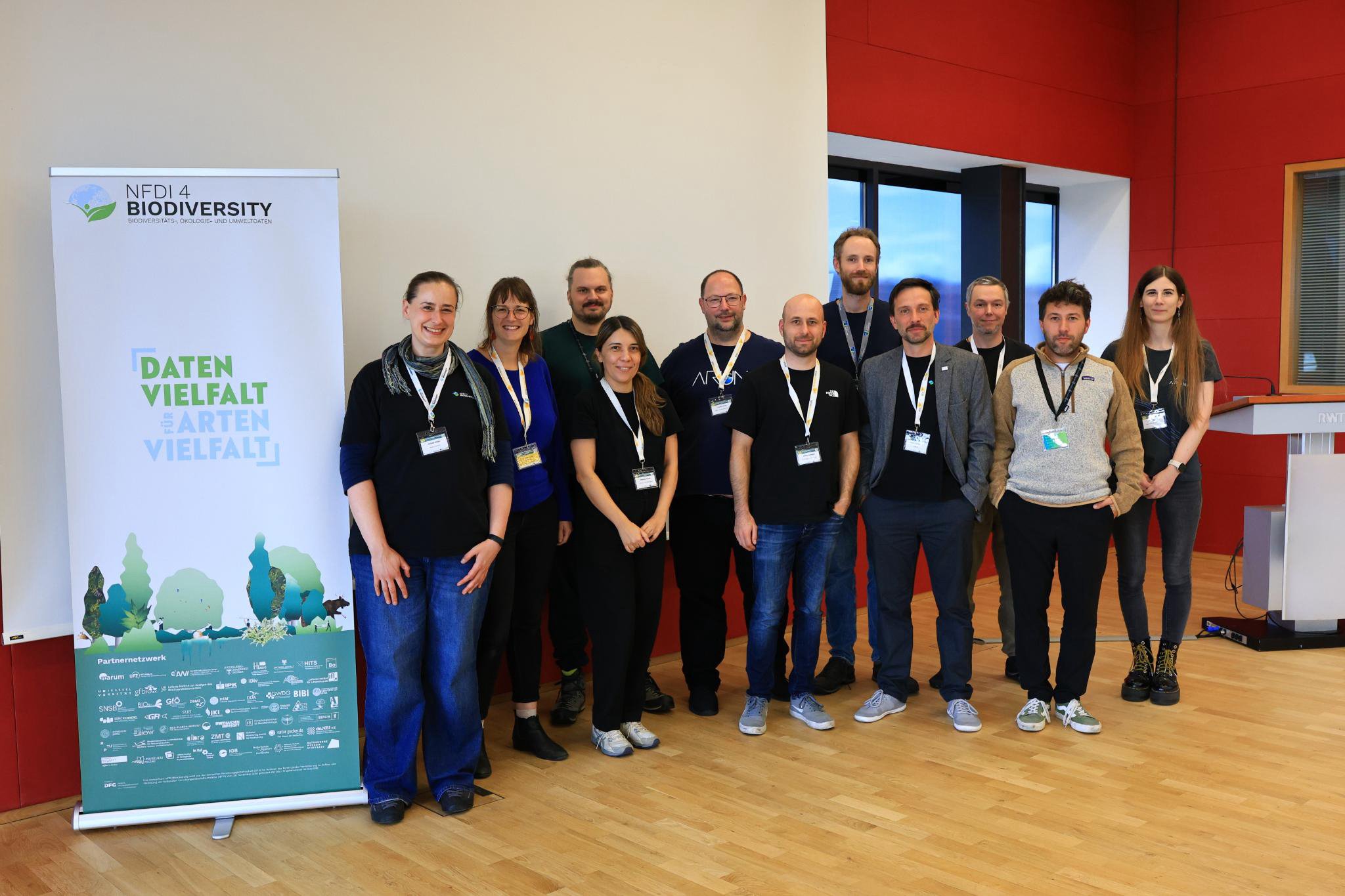
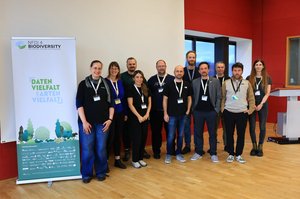
Two conferences, one shared goal: In September, the Biodata Interest Group brought together researchers, developers and users in Gatersleben and Aachen to strengthen exchange and collaboration around biological research data.
Six NFDI consortia have joined forces within the NFDI Biodata Interest Group, pooling their expertise to further develop joint research data management strategies, services and infrastructures for the biological sciences. In 2026, this collaboration gained significant momentum: Following a joint workshop in April, two scientific conferences took place in September – the NFDI4LifeSciences Conference and the Boosting Biodata Bootcamp Conference.
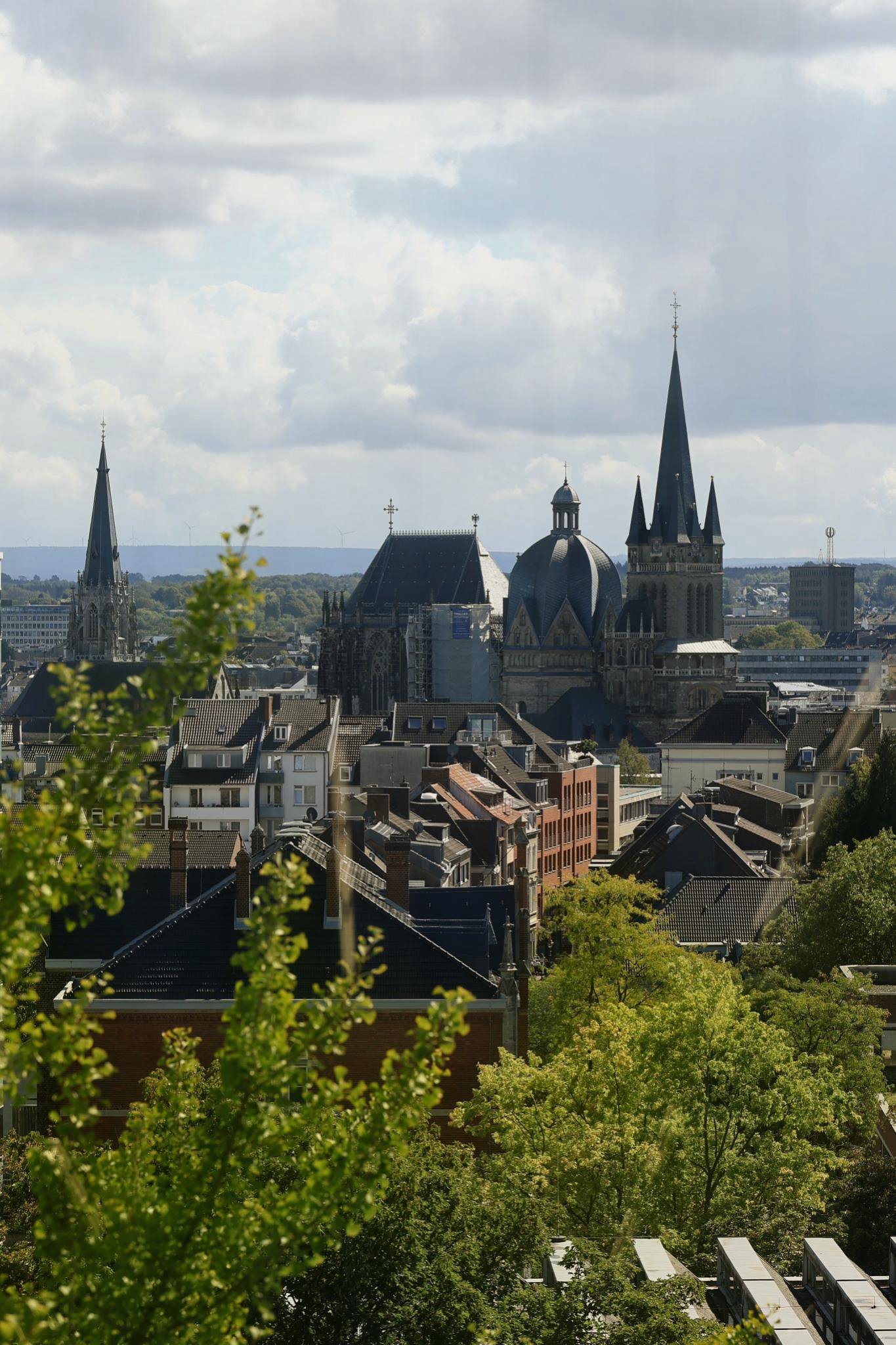
The two conferences addressed two key target groups of the Biodata IG. The developer community working on infrastructures, tools and services gathered at the Leibniz Institute of Plant Genetics and Crop Plant Research (IPK) in Gatersleben from 2 to 4 September 2026. This was followed by a community conference primarily aimed at users: From 15 to 17 September, RWTH Aachen University hosted discussions and workshops focusing on practical research data management in laboratory and field research, as well as the supporting services offered by the Biodata IG consortia.
Highlights from the NFDI4LifeSciences Conference
The NFDI4LS Conference on Integrative Bioinformatics, held jointly with the 20th International Symposium on Integrative Bioinformatics, was organised by NFDI4Biodiversity, DataPLANT and FAIRagro and brought together 71 participants from six countries.
The scientific programme featured seven keynote presentations, 23 talks and 18 poster presentations. A look at the abstract book illustrates the diversity of topics covered, ranging from metadata standards and AI-assisted data curation to FAIR research data (data that are Findable, Accessible, Interoperable and Reusable) and research data infrastructures. NFDI4Biodiversity contributed several talks and posters. The Best Poster Award went to Sarah Büker from the University of Bremen for her contribution, "What Is Your Favourite Bird? Using biodiversity data to teach data literacy across disciplines".
Beyond the scientific programme, the poster session accompanied by a barbecue, a guided city tour and the conference dinner provided opportunities to deepen exchange between the consortia and establish new connections. Special thanks go to all participants, the co-organisers, and de.NBI (ELIXIR Germany) and the German Research Foundation (DFG) for their financial support.
Networking and Learning at the Boosting Biodata Bootcamp 2026
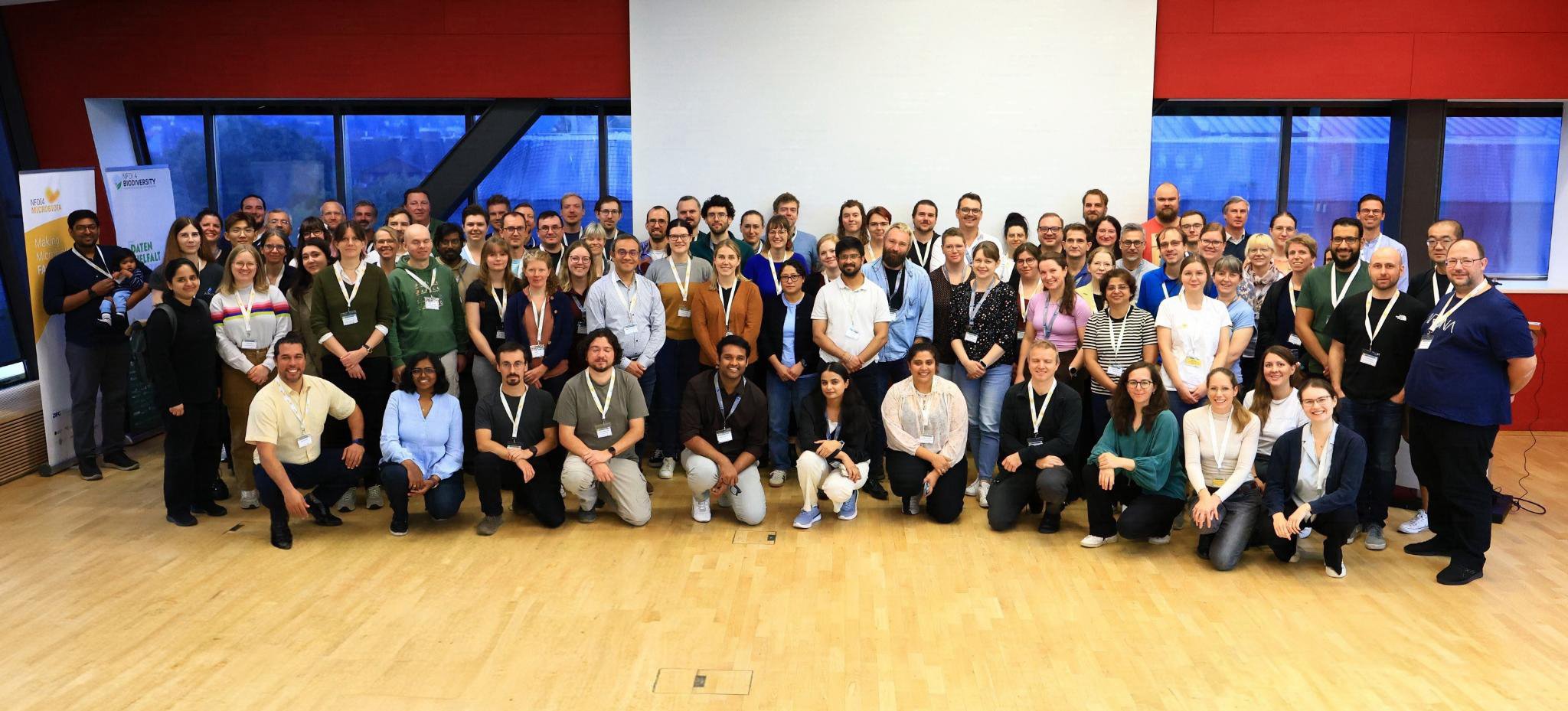
In mid-September, around 130 participants from a wide range of disciplines gathered in Aachen. The Boosting Biodata Bootcamp was organised within the framework of the Biodata Interest Group by the consortia NFDI4Microbiota, NFDI4BIOIMAGE, NFDI4Biodiversity, FAIRagro and DataPLANT. To encourage exchange within the community, NFDI4Biodiversity provided two travel grants.
With 13 workshops, twelve talks and two keynote presentations, the programme offered numerous opportunities for professional exchange and networking. The workshops in particular provided detailed insights into services and best practices for managing a wide variety of data types. NFDI4Biodiversity contributed to three workshops on data management plans, data publication and data curation, presented posters and showcased its work at the Software Marketplace, including the applications ARUNA, BIIGLE and BEXIS, as well as GFBio services (more information about the consortium's services is available here).
A particular highlight was the presentation of the FAIR Data Award during Thursday's closing session. Charlie Pauvert received the award for his talk, "A massively parallel cultivation platform for strain-level characterization of personalized microbial communities", which highlighted the diverse challenges of research data management, potential solutions and questions that remain open. A FAIR-themed pub quiz, shared dinners and plenty of opportunities for exchange and discussion rounded off the Bootcamp.
Both conferences provided ample opportunities to deepen exchange across disciplinary and consortium boundaries, gain insights into different requirements and challenges in research data management, and discuss potential solutions together. At the same time, they demonstrated how collaboration within the Biodata Interest Group can strengthen the dialogue between the development of research data infrastructures and their practical application.


Please enter your Mastodon instance
News
Bringing Biodata Communities Together: Two Confere...
From Volunteer Fish Observations to an Internation...
A Long-Term Future for NFDI: Transition to Permane...
BIIGLE4Beginners: A New Online Tutorial for Image ...
Open Data, Shared Responsibility: New Guidance Sho...
Historical Biodiversity Dataset Receives FAIRest D...
CloWM Joins the NFDI4Biodiversity Service Catalog ...
From Three to Six: Biodata Interest Group Publishe...
"Creating knowledge without data is impossible"