

 Juliane Röder
One Week of Ecology: Review of the GfÖ Annual Conference
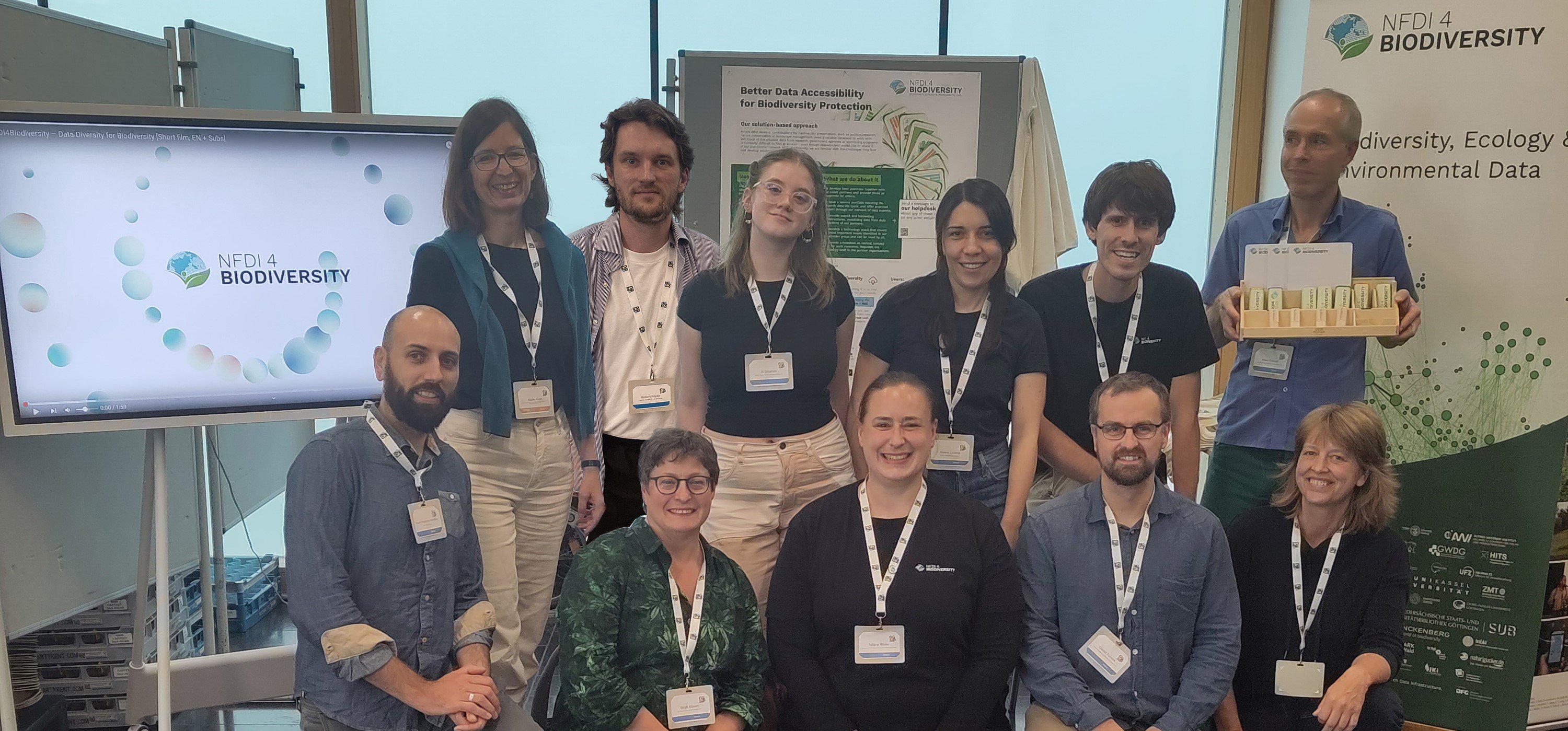
With the 2030 goals of the Convention on Biological Diversity in mind, the 52nd Annual Meeting of the Society for Ecology brought together experts from a variety of fields to discuss the most pressing ecological issues and innovative solutions.
The German Center for Integrative Biodiversity Research (iDiv) Halle-Jena-Leipzig hosted the annual conference of the Gesellschaft für Ökologie e.V. (GfÖ) in the impressive Neues Augusteum in Leipzig from September 12-16, 2023. Under the motto "The Future of Biodiversity - overcoming barriers of taxa, realms, and scales", over 1100 participants from more than 30 countries gathered to present the latest findings from the fields of experimental, applied, and theoretical ecology, biodiversity research, conservation, modeling, and many other facets of ecology in more than 700 talks and 300 posters.
NFDI4Biodiversity in action
The NFDI4Biodiversity consortium played an active role with a wealth of its own sessions, talks, posters and workshops. Birgit Gemeinholzer organized a symposium on the future of biodiversity monitoring, while Birgitta König-Ries led a session on the application of artificial intelligence to the qualitative and quantitative analysis of natural history collections. Mark Frenzel designed a session on long time series and historical data and their importance for our understanding of global change, while Christoph Schomburg organized a session on infrastructures and networks in biodiversity research with four presentations by NFDI4Biodiversity partners. Thore Engel and Martin Friedrichs-Manthey contributed a session on analyzing regional biodiversity change for conservation action. In addition, there were other exciting presentations, including one by Birgit Klasen, who presented a comparison of two large datasets on the flora of Bavaria.
The workshop by Jimena Linares and Daniel Tschink on the basics of research data management for biologists was particularly popular.
Keynote Insights: Discussions on the role of values in science
The four keynote speakers inspired the participants and triggered lively discussions in some cases. Esther Turnhout emphasized the importance, as scientists, of always questioning our own values and motives that guide our work. Her thesis that there is no such thing as neutral science and that cultural conditioning and societal norms and values influence us all provoked both dissent and agreement and led to stimulating discussions that continued well beyond the end of her talk in the hallways and halls of the conference.
Swedish successes: Data integration for nature conservation
A look at Sweden showed how successfully biodiversity data from academic, community, private sector, and private sources can be integrated into a common database. The species database curated by SLU not only serves as the basis for reports on the monitoring of FFH and Natura2000 species and sites, but public and private construction projects can also use it to find out whether they would affect protected species or habitats.
German Ecosystem Atlas: Insight into the world of terrestrial and marine ecosystems
The German Federal Statistical Office again presented their publicly available digital atlas of all terrestrial and marine ecosystems in Germany. The atlas is used to monitor changes in ecosystem extent, quality, and performance, as well as for environmental economic overall calculations.
Innovating in environmental protection and biodiversity: The role of the conference as a meeting place
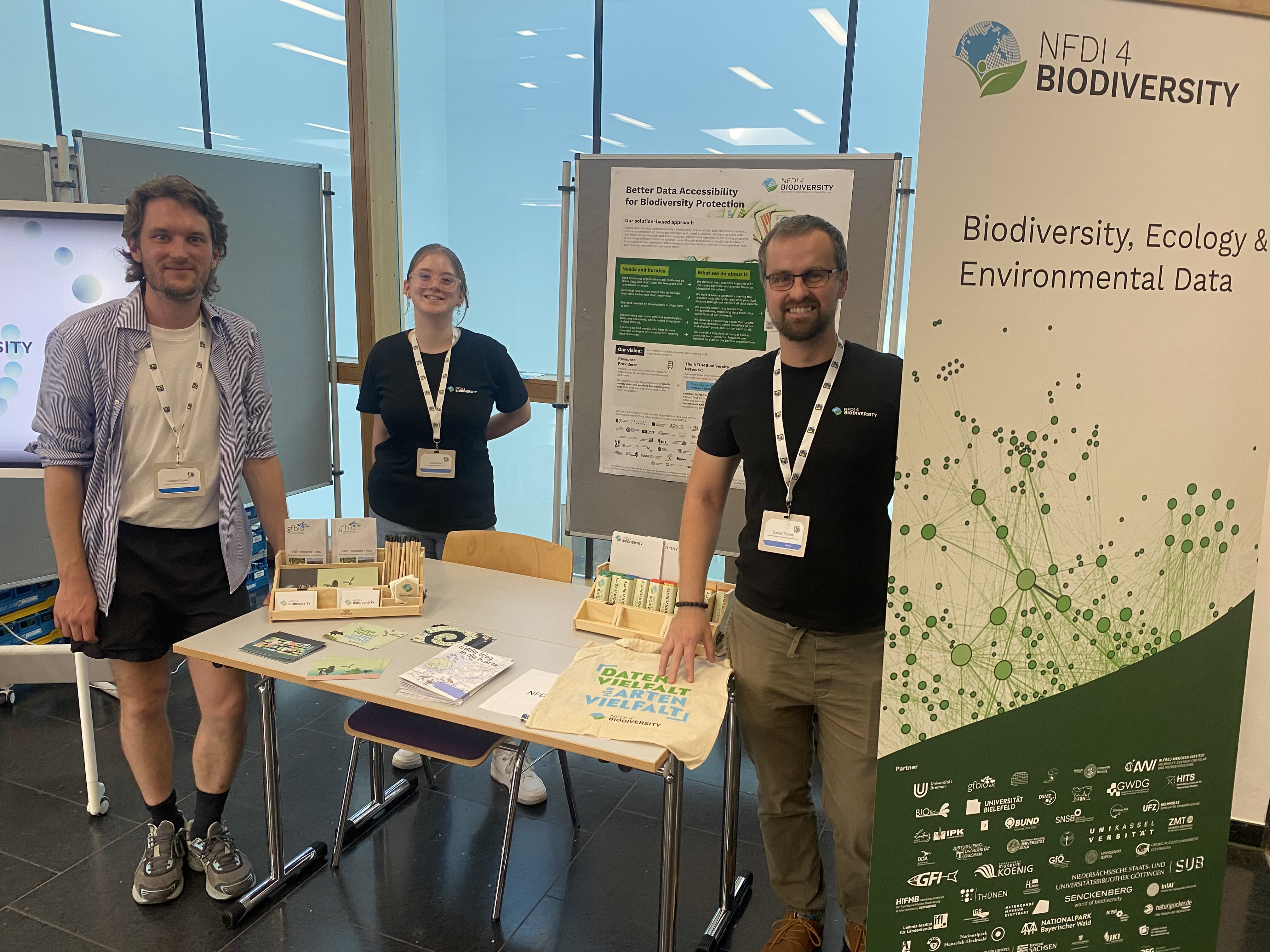
The conference provided a framework in which experts could share their innovative ideas to jointly develop solutions to pressing issues in the field of environmental protection and biodiversity. NFDI4Biodiversity played an active role in this process by contributing to the strengthening of the data infrastructure for research and practice through its own contributions and by fostering collaboration between different stakeholders. Thus, during this event, not only valuable insights were shared, but also the foundations for future interdisciplinary collaborations and research projects were laid. This will help to deepen our understanding of environmental issues and take concrete steps towards sustainable biodiversity conservation.
NFDI4Biodiversity conference participation
Sessions
- NFDI4Biodiversity – Regional biodiversity change analyses to support conservation management and actions (Martin Friedrichs-Manthey, Lina Lüttgert, Shawan Chowdhury, Thore Engel).
- NFDI4Biodiversity – Infrastructures and Networks in Biodiversity Research (Christoph Schomburg)
- NFDI4Biodiversity – Long-term and historical data: prerequisites to reveal changes in ecosystems in the light of global change (Mark Frenzel, Jörg Müller)
Symposium
- NFDI4Biodiversity – The Future of Biodiversity Monitoring (Henrique Pereira, Birgit Gemeinholzer, Wiebke Sickel, Vamsi Krishna Kommineni, Christophe Dominik, Michael Beckmann, Sebastian T. Meyer, Patrick Mäder )
Workshop
- NFDI4Biodiversity – How to better manage your data - and thereby enrich research (Daniel Tschink, Jimena Linares, Claas-Thido Pfaff, Ivaylo Kostadinov)


Please enter your Mastodon instance
News
A Long-Term Future for NFDI: Transition to Permane...
BIIGLE4Beginners: A New Online Tutorial for Image ...
Open Data, Shared Responsibility: New Guidance Sho...
Historical Biodiversity Dataset Receives FAIRest D...
CloWM Joins the NFDI4Biodiversity Service Catalog ...
From Three to Six: Biodata Interest Group Publishe...
"Creating knowledge without data is impossible"
NFDI4Biodiversity Flexfunds: Three Projects Show H...
New interface connects official species observatio...